PIMS brings Mathematics to Canada’s AI Policy Conversation
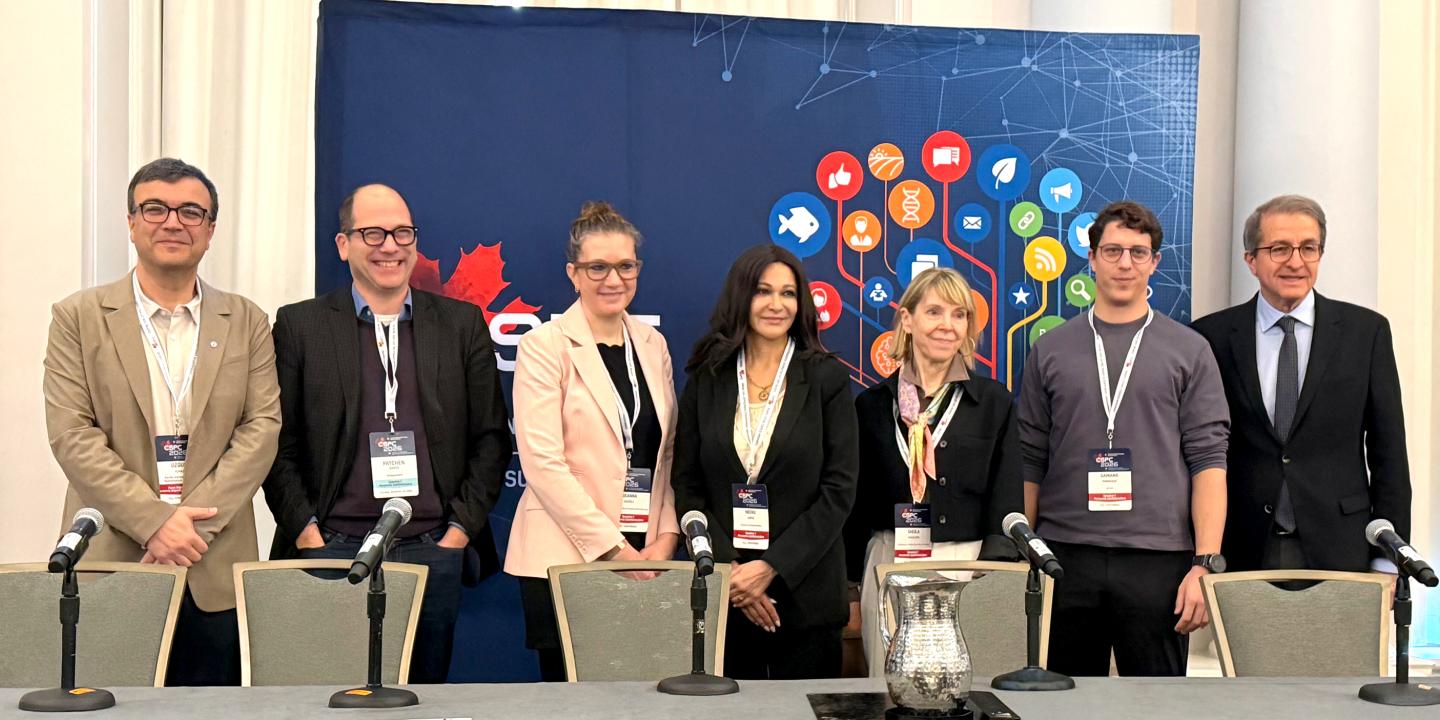
What does it take to build AI systems Canadians can trust? That question was at the heart of Mathematical Foundations of Canada’s AI Future, a panel co-organized by PIMS and Canada’s other mathematical sciences institutes for the November 24 session at the inaugural AI Policy and Governance Summit, which opened the Canadian Science and Innovation Policy Conference in Ottawa. PIMS Director Özgür Yilmaz and Deanna Needell (PIMS Co-Director, Programs) organized the panel, with a framing presentation opened by Yilmaz. The panelists were Alejandro Adem (President, NSERC), Damiano Fornasiere (LawZero), Neeru Gupta (UBC), Sheila McIlraith (University of Toronto and Vector Institute), and Deanna Needell, with science journalist Patchen Barss as moderator.
The panel's case was that mathematics is the foundation of AI, and that it belongs in Canada's AI strategy: for trust, for getting more out of the country's investment in compute, and for sovereignty over the systems Canada relies on. It proposed three priorities for the strategy's next update: name mathematics in it, build bridges between the mathematical and AI institutes in research and training, and include mathematicians when AI strategy is set. In a September editorial for the Canadian Science Policy Centre, "The Missing Pillar: Why AI for All Needs Mathematics", Yilmaz, Needell, and the directors of AARMS, BIRS, CRM, and Fields called for investment in foundational research to improve AI reliability, interpretability and safety, and for mathematical expertise to help shape Canada’s AI strategy.
Attendees responded positively to the panel, noting that AI can feel daunting and that they found it reassuring to see mathematicians involved in discussions about its development and governance.
The panel was part of the 2026–27 PIMS Thematic Year on Mathematics and Artificial Intelligence, which brings together researchers, students, industry and policymakers to explore how mathematics can make AI more trustworthy, safe, and efficient, and how AI is changing mathematical research.